
In modern urban developments, residential design has increasingly turned inward. High-rise apartment complexes and standardized row houses often enclose living rooms behind sealed glass windows, prioritizing artificial air conditioning over natural airflow. While this offers temporary privacy, it eliminates the social warmth and passive climate comfort that once defined South Indian residential architecture.
Across Coimbatore and the wider Kongu region, a quiet architectural revival is underway. High-end homeowners and discerning NRI families are seeking residences that reincorporate the Thinnai—the elevated front verandah of classical Tamil homes. But why is an architectural element designed centuries ago gaining renewed demand in contemporary luxury villas?
1. The Social Soul of the Dravidian Residence
Historically, the home was never conceived as an impenetrable box. The Thinnai served as an organic transitional threshold between the public street and private domestic quarters. It was a space where elders reclined on cool stone benches, neighbors paused for spontaneous morning conversations, and children played under the shelter of deep timber rafters.
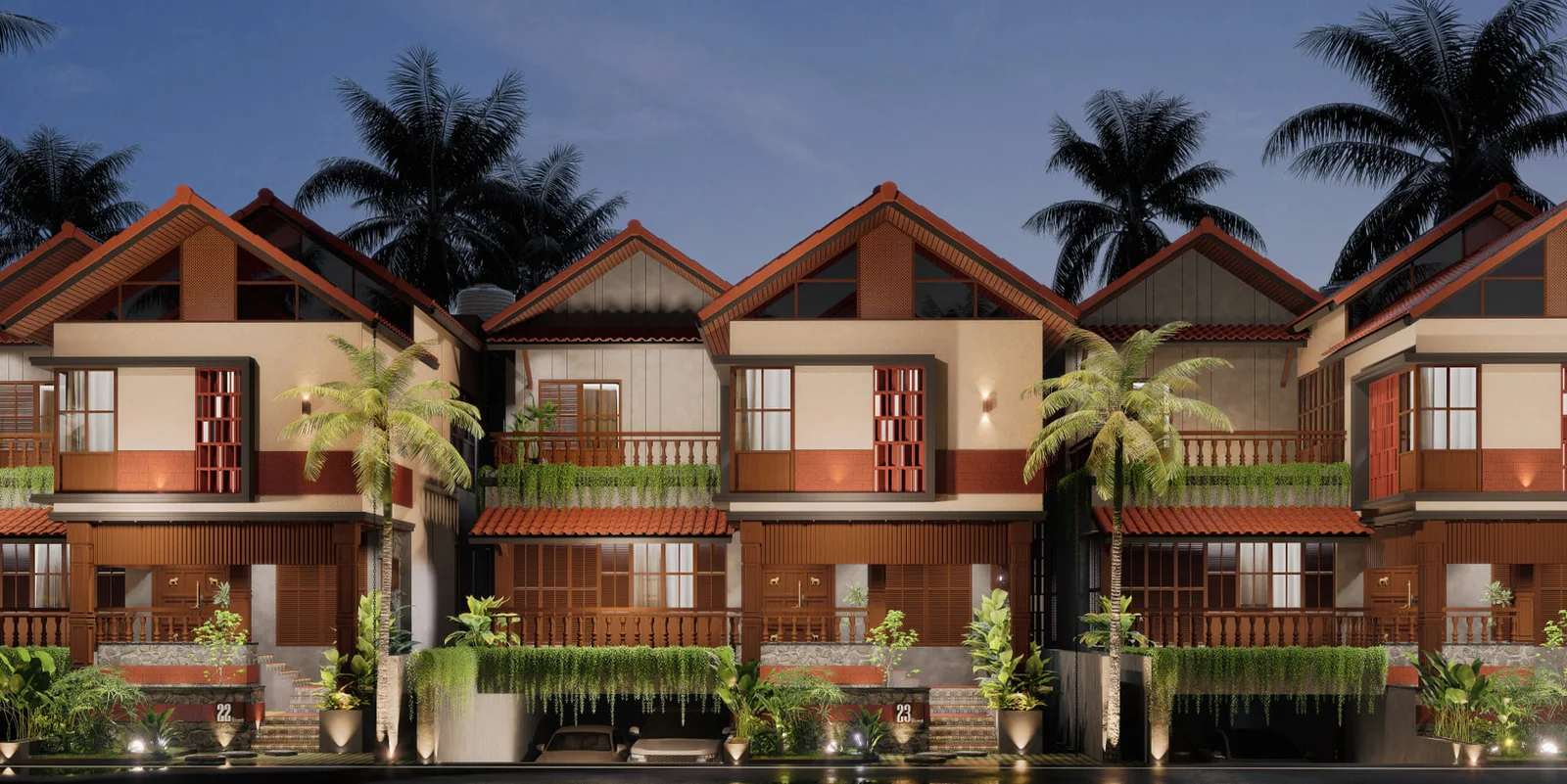
Modern luxury villas at IL Valam (Yaazh Homes Phase 2) restore this human connection[cite: 2]. By elevating the front porch on seasoned timber pillars and heavy-duty stone bases, the Thinnai creates a sheltered gathering area that welcomes guests warmly without compromising the interior privacy of the family living rooms.
2. Passive Climate Buffer: Ancient Thermodynamics
Beyond social utility, the Thinnai is a masterpiece of thermodynamic engineering. Traditional master builders understood the intense subtropical sun of Tamil Nadu and designed verandahs to function as thermal shock absorbers:
- Deep Roof Overhangs: Shaded eaves block harsh midday sunbeams from striking external walls directly, reducing heat absorption into interior living quarters.
- Pre-Cooled Air Intakes: As ambient winds pass through the shaded verandah, their temperature drops noticeably before circulating through double-height living foyers and central courtyards.
- Natural Rain Deflection: During monsoons, the elevated floor prevents surface splashback while sloped terracotta tiles channel water safely into underground percolation wells.
3. Modern Engineering Meets Heritage Craftsmanship
Reviving the Thinnai in 2026 does not mean sacrificing modern luxuries. At IL Valam in Cheran Maa Nagar, each 4 and 5 BHK villa integrates these timeless wooden verandahs with contemporary conveniences: integrated elevator shaft provisions, two covered vehicular bays with EV charging conduits, and app-synced security access[cite: 2].
The result is a residence that preserves heritage identity while delivering structural permanence designed to endure across generations[cite: 2].